Report overview Download this sectionIn this sectionAbout this reportAbout the Minerals Council South AfricaOur role in creating value for the mining and minerals sectorExecutive summary of the year under review
This is the integrated annual review of the Minerals Council South Africa (Minerals Council) for the financial year and reporting period of 1 January to 31 December 2025. The report is an account of our strategy and performance and covers noteworthy events and developments in the mining industry during the reporting period. It aims to provide members and key stakeholders of the Minerals Council with a holistic view of our progress and ability to create, enhance and preserve value. While this report is an account of the Minerals Council’s performance, we also, where relevant, indicate the position and role of the mining industry.
Our role in creating value for the mining and minerals sector
Financial capital
We create financial capital through membership subscriptions, programme funding and collaborative investments that enable the Minerals Council to execute its mandate and support industry-wide initiatives.
Manufactured capital
While the Minerals Council itself does not participate directly in mining, processing or manufacturing, we support the value creation of physical and technological infrastructure, including mining operations, logistics networks and supporting infrastructure.
Intellectual capital
We contribute organisational knowledge, research, innovation and industry best practices that enhance competitiveness.
Human capital
We enhance value through the knowledge, skills, health and experience of employees in the mining industry.
Social and relationship capital
We create significant value through the relationships with key stakeholders in the mining industry, including communities, government, labour unions, civil society and the media.
Natural capital
Our focus on the environmental resources that mining depends on, including land, water, biodiversity and air quality, creates value for our stakeholders.
Executive summary of the year under review
Key achievements in 2025
Economic contribution
The mining industry accounted for 6.2% of gross domestic product (GDP) (nominal), with total primary sales reaching R861.1 billion, up 7.3% from the prior year.
Mining remained a cornerstone of South Africa’s economy, supporting employment, export earnings and fiscal revenues.
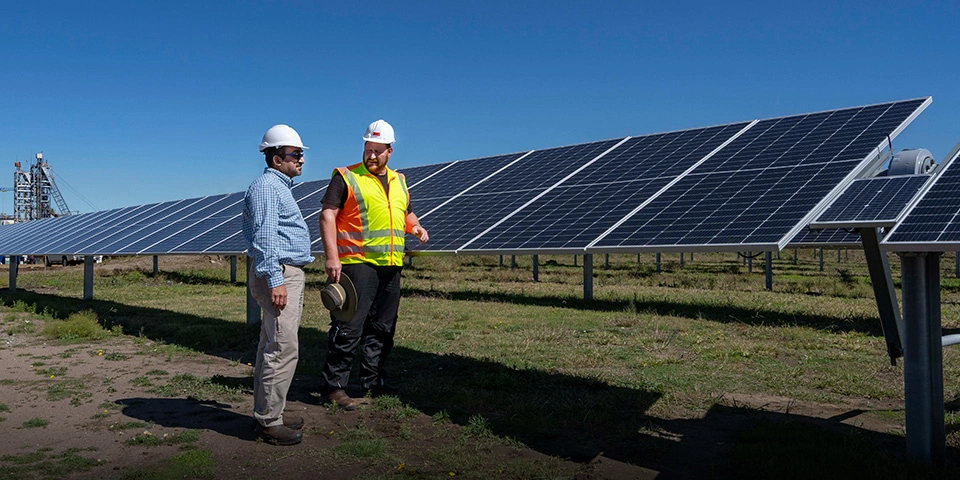
Approximately 6.5GW of installed renewable energy capacity across member companies strengthened energy resilience and long-term cost stability.
Health and safety improvements
51% increase in adoption of eight validated safety leading practices across four risk areas, namely falls of ground (FOG), transportation and machinery, dust and noise.
54 additional mines implemented validated leading practices. The Mining Industry Occupational Safety and Health (MOSH) Learning Hub remained central to peer learning and structured adoption of leading practices.
FOG fatalities recorded at 15 (2024: 13), reinforcing the need for continued focus on critical risk elimination. Pockets of excellence, presented through member case studies, showed that Falls of Ground Action Plan (FOGAP) learnings and leading practices, particularly the implementation of permanent netting, are preventing fatal incidents and saving lives.
Industry adoption of Khumbul’ekhaya 2.0 strengthened leadership accountability, critical control management, safety-data integration, human-centric wellness, and safety and health-driven innovation across member operations.
Expanded Masoyise Health Strategy (2025–2030), incorporating mental health and broader well-being support.
From 2023 to 2024 (latest available verified data), new silicosis cases declined by 41% and tuberculosis (TB) incidence reduced to 31.3 per 10,000 employees.
51% increase in adoption of eight validated safety leading practices across four risk areas, namely falls of ground (FOG), transportation and machinery, dust and noise.
54 additional mines implemented validated leading practices. The Mining Industry Occupational Safety and Health (MOSH) Learning Hub remained central to peer learning and structured adoption of leading practices.
FOG fatalities recorded at 15 (2024: 13), reinforcing the need for continued focus on critical risk elimination. Pockets of excellence, presented through member case studies, showed that Falls of Ground Action Plan (FOGAP) learnings and leading practices, particularly the implementation of permanent netting, are preventing fatal incidents and saving lives.
Industry adoption of Khumbul’ekhaya 2.0 strengthened leadership accountability, critical control management, safety-data integration, human-centric wellness, and safety and health-driven innovation across member operations.
Expanded Masoyise Health Strategy (2025–2030), incorporating mental health and broader well-being support.
From 2023 to 2024 (latest available verified data), new silicosis cases declined by 41% and tuberculosis (TB) incidence reduced to 31.3 per 10,000 employees.
Employment and wages
The mining industry provided an average of 470,457 jobs, with total employee earnings increasing by 1.4% to R200.2 billion.
Engagement on the Employment Equity (EE) Amendment Act supported sustainable implementation of five-year equity plans.
Continued focus on skills pipeline development and retention at professionally qualified and technical levels.
Strengthened leadership succession planning and incentive alignment within the Minerals Council.
Industry reforms and advocacy
The Minerals Council supported the industry in three key areas:
Formal submission on the Mineral Resources Development Bill (MRD Bill) following structured multi-stakeholder consultation.
Engagements on the implementation of the Climate Change Act and carbon budget framework.
Policy advocacy on energy reform, logistics stabilisation and water governance to unlock investment and growth.
Environmental and sustainability gains
R74 million contributed to the Vaal Gamagara Water Supply Scheme (VGWSS) refurbishment, with R268 million secured for Phase 2 upgrades.
Enhanced Water Conservation and Water Demand Management (WC/WDM) through updated benchmarks and revision of the WC/WDM Self-Assessment Reporting Tool (WSART).
Establishment of the Climate Change Observatory Dashboard to strengthen members' climate action.
Innovation and advancement in mine rehabilitation, leading to significant reduction of environmental footprint.
Social impact
21,555 occupational disease compensation claims certified, with R500 million disbursed.
Five occupational disease compensation outreach campaigns conducted across three provinces to support affected former mineworkers and families.
21,555 occupational disease compensation claims certified, with R500 million disbursed.
Five occupational disease compensation outreach campaigns conducted across three provinces to support affected former mineworkers and families.
Leadership and governance Download this sectionIn this sectionMessage from the Minerals Council PresidentMessage from the Chief Executive OfficerOur Board and approach to governance
Message from the Minerals Council President
If South Africa is to unlock inclusive growth and meaningful job creation, mining must be positioned to thrive.
The mining industry experienced 2025 as a year of both significant challenges and considerable opportunities. The global mining landscape is shifting. The strategic importance of minerals has risen sharply as countries prioritise security of supply, energy transition technologies and industrial resilience. In an increasingly multipolar world, access to critical minerals has become central to economic and geopolitical stability. For South Africa, endowed with world-class mineral resources, this presents a generational opportunity.
In 2025, the Minerals Council continued to strengthen its role as the trusted voice of the South African mining industry. The year under review was characterised by disciplined execution, targeted advocacy and measurable delivery against our strategic goals, despite a complex and evolving operating environment.
Our operating context Download this sectionIn this sectionKey conditions shaping mining in 2025Our policy and agenda
Key conditions shaping mining in 2025
The South African mining industry operated in a complex domestic and global environment during 2025, characterised by structural infrastructure constraints, evolving regulatory reform and intensifying global climate transition pressures. Mining remained a foundational contributor to the economy, supporting employment, export earnings and fiscal revenues, and continuing to underpin industrial development through its strong multiplier effects.
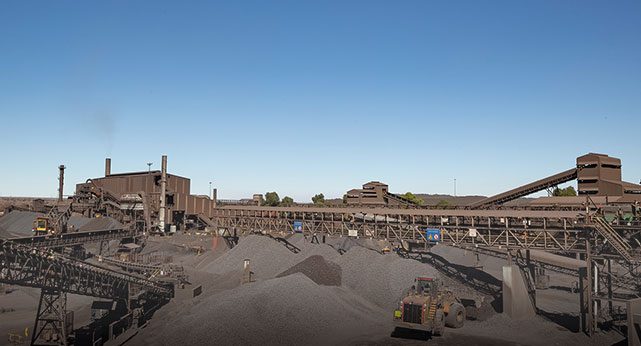
Tharisa Minerals
Our numbers show and tell the story*
Industry turnover (1.1%)R1.1 trillion(2024: R1.08 trillion)
Direct GDP contribution (current prices)**R477.1 billion(2024: R442.7 billion)
Percentage contribution to GDP6.2%(2024: 6.0%)
Total primary sales (7.3%)R861.1 billion(2024: R802.7 billion)
Mineral exports (5.5%)R816.1 billion(2024: R773.6 billion)
Source: Statistics South Africa (Stats SA), Department of Mineral and Petroleum Resources (DMPR), South African Revenue Service (SARS)
*
2025 refers to the 2024/25 financial year ending in March 2025; 2024 refers to the 2023/24 financial year.
**
Based on current market prices.
#
Full-year employment.
^
Based on fiscal not calendar year.
Value creation Download this sectionIn this sectionOur business modelHow the Minerals Council creates value for South African miningCore disciplines supporting value creationOur core capabilitiesOur leadership forumsOur stakeholders and outputs delivered
The Minerals Council creates value by enabling collective action across the mining ecosystem to address systemic constraints, improve policy coherence and strengthen the long-term competitiveness and sustainability of the South African mining industry.
Our business model
Inputs
Inputs draw on the six capitals (financial, manufactured, intellectual, human, social and relationship, and natural), as reported in the Performance against capital section. These include member funding, industry expertise, leadership capacity, research capability, data and institutional relationships.
Activities
Activities focus on issue identification, policy analysis, stakeholder engagement and guidance on leading practice. These activities are prioritised through the Minerals Council’s strategic objectives and informed by the principal strategic risks affecting the organisation and the mining sector. Principal strategic risks and risk responses are described in the Risk management section.
Outputs
Outputs include coordinated industry positions, policy submissions, platforms for engagement, research and shared standards. These outputs represent the Minerals Council’s immediate contribution and are reflected in changes to the six capitals, as reported in the Performance against capital section.
Outcomes
Outcomes are reflected in improved policy coherence, reduced regulatory uncertainty, enhanced industry credibility and strengthened operating conditions. Performance against these outcomes is reported in the Performance and impact section.
Long term value
Long-term value is realised through a more competitive, sustainable and investable mining sector, contributing to economic growth, employment and societal development.
How the Minerals Council creates value for South African mining
Policy architecture and legislative engagement
The Minerals Council continues to serve as the primary structured interface between the mining industry and policymakers. Through coordinated submissions, economic modelling, legal analysis and multi-stakeholder dialogue processes, the Minerals Council provides evidence-based input into legislative reform.
The Minerals Policy Review and subsequent MRD Bill submission process illustrated the Minerals Council’s convening capacity, facilitating dialogue not only among member companies but also with civil society, organised labour, investors and research partners. This structured engagement strengthens regulatory coherence while preserving investment certainty.
Safety and health leadership
Through mechanisms such as the MOSH Learning Hub and CEO Zero Harm Forum, the Minerals Council supports peer learning and the adoption of leading practices across the industry. Measurable reductions in occupational fatalities, injuries, disease incidence and dust exposure over the past decade reflect sustained coordination and standard-setting influence.
The Masoyise Health Programme Strategy and strengthened post-incident medical governance frameworks demonstrate an integrated approach to workforce well-being and institutional oversight.
Research, modernisation and innovation coordination
The MMP and RIIS Modernisation Partnership illustrate the Minerals Council’s role in coordinating pre-competitive research and development. Approximately R1.97 billion in RD&I expenditure was mapped in 2025, achieving progress against productivity, safety, health and sustainability objectives.
This collaborative research ecosystem enhances South Africa’s ability to compete in an increasingly technology-driven global mining environment.
Environmental governance and climate coordination
Through engagement on water governance and regulatory framework, mine closure reform, waste management, tailings management standards and climate policy alignment, the Minerals Council contributes to strengthening environmental regulatory frameworks while preserving operational feasibility.
The establishment of the Climate Change Observatory Dashboard further enhances the quality and consistency of data collection, providing a robust baseline for industry-wide climate response initiatives and improving transparency to strengthen credibility with key stakeholders.
Social stability and transformation dialogue
The Minerals Council provides structured platforms for engagement between employers, organised labour, communities and government, playing a stabilising role in navigating complex social and transformation debates.
The Minerals Council’s enduring contribution lies not only in advocacy but in its ability to convene, coordinate and provide institutional continuity within a dynamic operating environment.
Opportunity alone does not guarantee progress. We must ensure that South Africa is positioned to maximise the benefits of this evolving global environment.
The Minerals Council applies a structured risk and materiality assessment process to identify, evaluate and manage the issues most likely to affect the organisation, its members and the broader mining industry. This process informs strategic planning, governance oversight and programme prioritisation, ensuring that resources are directed towards the most significant risks and opportunities.
Unreliable rail and port infrastructure affecting export volumes, efficiency and revenue realisation.
Rising theft, illegal mining and organised crime targeting mining operations and supply chains.
Why it matters to value
Constrains production, raises operating costs and undermines investment confidence.
Limits market access, reduces competitiveness and erodes export performance.
Drives operational disruption, safety risks and direct economic losses.
Management focus and key response strategies
Continued engagement with Eskom, the Energy Council and government through NECOM and Business for South Africa to support electricity market reform, expand self-generation, improve grid access and stabilise long-term electricity costs.
Engagement with Transnet through recovery teams and the NLCC; focus on stabilising priority bulk commodity corridors and improving port performance.
Collaboration with government, SAPS and business partners through the Joint Initiative on Crime and Corruption to strengthen enforcement, investigations and prosecutions.
Strategic goal(s)
Goal 1 Goal 2
Goal 1 Goal 2
Goal 2
Social
Principal risk
Health and safety
Social performance
Transformation
Compensation framework for OLDs
Risk description and potential impact
Occupational health and safety risks in high-risk mining environments and challenges in achieving zero harm.
Mismatch between development outcomes and community expectations leading to unrest.
Perceptions of slow progress on transformation, inclusion and procurement.
Uncertainty over the design, funding and implementation of a sustainable compensation framework.
Why it matters to value
Impacts workforce stability, regulatory compliance and sector reputation.
Threatens operational continuity, trust and social licence to operate.
Heightens stakeholder scrutiny and reputational risk.
Creates legal, financial and reputational exposure for the sector.
Management focus and key response strategies
Implementation of Khumbul’ekhaya 2.0 through the CEO Zero Harm Forum and MOSH Learning Hub to reduce fatalities, exposures and safety incidents.
Support for coordinated member-led social investment; engagement with the South African Local Government Association (SALGA) and local stakeholders to improve infrastructure and service delivery.
Promotion of Transformation Beyond Compliance; monitoring progress, sharing best practices and engagement on legislative reform.
Collaborating with the DOH on legislative reform to create a fair and sustainable compensation framework.
Strategic goal(s)
Goal 3
Goal 2 Goal 3
Goal 2 Goal 3
Goal 3
Environment
Principal risk
Environmental and climate transition risk
Risk description and potential impact
Environmental liabilities, evolving regulation and climate-related transition and physical risks.
Why it matters to value
Creates compliance exposure, cost pressures and market-access risk.
Management focus and key response strategies
Support for just energy transition planning; implementation of decarbonisation roadmaps; engagement on environmental regulatory alignment and licensing challenges.
Strategic goal(s)
Goal 1 Goal 2 Goal 3
Governance
Principal risk
Policy and regulatory environment
Political risk
Risk description and potential impact
Policy uncertainty, permitting delays and regulatory changes affecting investment and growth decisions.
Social instability, coalition governance risk and weak local government capacity affecting service delivery.
Why it matters to value
Undermines investment certainty, project timelines and long-term sector competitiveness.
Disrupts operations, undermines investor confidence and delays reform implementation.
Management focus and key response strategies
Monitoring legislative developments; structured engagement with departments (DMPR, DFFE) on permitting, licensing, the MRD Bill and regulatory reform.
Engagement on structural economic reforms; advocacy for stable investment conditions and pragmatic trade and foreign policy positioning.
Constrains production, raises operating costs and undermines investment confidence.
Management focus and key response strategies
Continued engagement with Eskom, the Energy Council and government through NECOM and Business for South Africa to support electricity market reform, expand self-generation, improve grid access and stabilise long-term electricity costs.
Strategic goal(s)
Goal 1 Goal 2
Principal risk Infrastructure
Risk description and potential impact
Unreliable rail and port infrastructure affecting export volumes, efficiency and revenue realisation.
Why it matters to value
Limits market access, reduces competitiveness and erodes export performance.
Management focus and key response strategies
Engagement with Transnet through recovery teams and the NLCC; focus on stabilising priority bulk commodity corridors and improving port performance.
Strategic goal(s)
Goal 1 Goal 2
Principal risk Security, crime and illegal mining
Risk description and potential impact
Rising theft, illegal mining and organised crime targeting mining operations and supply chains.
Why it matters to value
Drives operational disruption, safety risks and direct economic losses.
Management focus and key response strategies
Collaboration with government, SAPS and business partners through the Joint Initiative on Crime and Corruption to strengthen enforcement, investigations and prosecutions.
Strategic goal(s)
Goal 2
Social
Principal risk Health and safety
Risk description and potential impact
Occupational health and safety risks in high-risk mining environments and challenges in achieving zero harm.
Why it matters to value
Impacts workforce stability, regulatory compliance and sector reputation.
Management focus and key response strategies
Implementation of Khumbul’ekhaya 2.0 through the CEO Zero Harm Forum and MOSH Learning Hub to reduce fatalities, exposures and safety incidents.
Strategic goal(s)
Goal 3
Principal risk Social performance
Risk description and potential impact
Mismatch between development outcomes and community expectations leading to unrest.
Why it matters to value
Threatens operational continuity, trust and social licence to operate.
Management focus and key response strategies
Support for coordinated member-led social investment; engagement with the South African Local Government Association (SALGA) and local stakeholders to improve infrastructure and service delivery.
Strategic goal(s)
Goal 2 Goal 3
Principal risk Transformation
Risk description and potential impact
Perceptions of slow progress on transformation, inclusion and procurement.
Why it matters to value
Heightens stakeholder scrutiny and reputational risk.
Management focus and key response strategies
Promotion of Transformation Beyond Compliance; monitoring progress, sharing best practices and engagement on legislative reform.
Strategic goal(s)
Goal 2 Goal 3
Principal risk Compensation framework for OLDs
Risk description and potential impact
Uncertainty over the design, funding and implementation of a sustainable compensation framework.
Why it matters to value
Creates legal, financial and reputational exposure for the sector.
Management focus and key response strategies
Collaborating with the DOH on legislative reform to create a fair and sustainable compensation framework.
Strategic goal(s)
Goal 3
Environment
Principal risk Environmental and climate transition risk
Risk description and potential impact
Environmental liabilities, evolving regulation and climate-related transition and physical risks.
Why it matters to value
Creates compliance exposure, cost pressures and market-access risk.
Management focus and key response strategies
Support for just energy transition planning; implementation of decarbonisation roadmaps; engagement on environmental regulatory alignment and licensing challenges.
Strategic goal(s)
Goal 1 Goal 2 Goal 3
Governance
Principal risk Policy and regulatory environment
Risk description and potential impact
Policy uncertainty, permitting delays and regulatory changes affecting investment and growth decisions.
Why it matters to value
Undermines investment certainty, project timelines and long-term sector competitiveness.
Management focus and key response strategies
Monitoring legislative developments; structured engagement with departments (DMPR, DFFE) on permitting, licensing, the MRD Bill and regulatory reform.
Strategic goal(s)
Goal 1 Goal 2
Principal risk Political risk
Risk description and potential impact
Social instability, coalition governance risk and weak local government capacity affecting service delivery.
Why it matters to value
Disrupts operations, undermines investor confidence and delays reform implementation.
Management focus and key response strategies
Engagement on structural economic reforms; advocacy for stable investment conditions and pragmatic trade and foreign policy positioning.
Strategic goal(s)
Goal 1 Goal 2
Performance and impact Download this sectionIn this sectionPerformance against strategic goalsPerformance against six capitalsMining and sustainability
Performance against strategic goals
The Minerals Council’s strategy is anchored in four strategic goals designed to advance a globally competitive, sustainable and transformed mining industry in South Africa. In 2025, these goals guided our policy engagement, safety and health leadership, research and innovation coordination, stakeholder alignment and institutional strengthening in response to a complex operating environment. Progress against each goal is presented alongside the key outcomes achieved and the value realised for members and the sector.
Strategic goal 1
Drive the development of a shared vision for a globally competitive mining industry that is a significant contributor to South Africa’s economy and supported by all stakeholders.
Strategic goal 2
Advocate and lobby for a policy, infrastructure and social environment that is conducive to investment and growth of the industry and maximises the benefit for the country from its mineral endowment.
Strategic goal 3
Communicate progress and impact of aggregate economic, environmental, social and governance (EESG) performance, with specific reference to transformation, health and safety, and adoption of leading practices.
Strategic goal 4
Ensure continuous improvement of the effectiveness and service of the Minerals Council to members.

![Minerals Council 2025 Integrated Annual Review [thumbnail]](images/content/2025/magazine-a.png)
![Minerals Council 2025 Annual Financial Statements [thumbnail]](images/content/2025/magazine-b.png)